




From Vinyl to Viral: How Algorithms and Labels Reshaped The Music Industry
-
- November 27, 2025

The entertainment industry has always been significantly shaped by change: technological, cultural, and economic.
But no shift has transformed the music industry as dramatically as the rise of streaming platforms and the new digital world of music, dominated by playlists, algorithms, and viral songs.
From the warm crackle of vinyl to the compressed clarity of digital files, each era of music consumption has left a permanent imprint on the industry.
What was once an industry of radio programs, record stores, and label executives has become a system governed by algorithms, social media virality, and performance. Today’s musicians can’t just follow their creative hearts; they have to satisfy a machine that controls who is heard and who vanishes into the realm of underrated artists.
In this article, we will explore how algorithms work, how they changed the music industry, how artists and labels have adapted, or struggled, in this digital age of music.
Before Algorithms
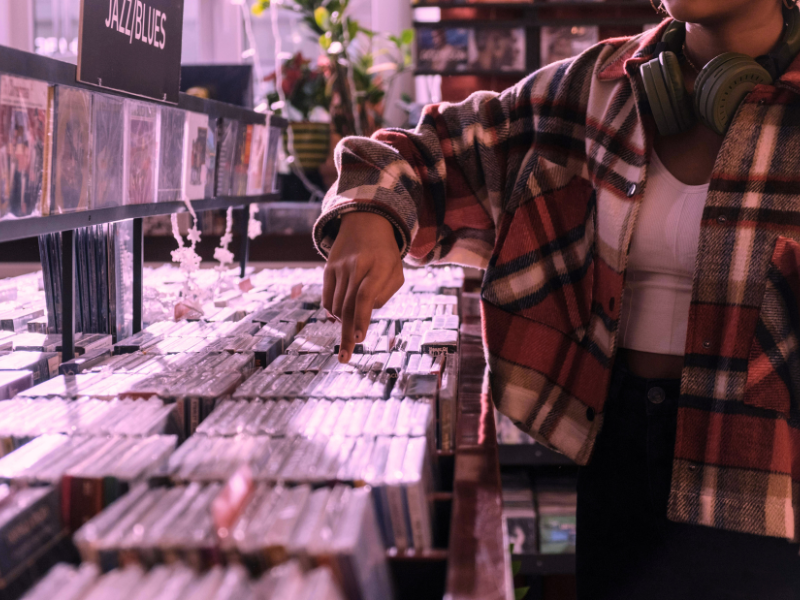
Not long ago, the music industry functioned on a simple foundation: if you liked a band, you bought their vinyl, cassette, or CD.
Record stores, radio stations, and MTV determined what was heard. Discovery was imperfect but exciting; maybe you found a new artist because of a staff pick at Tower Records or because someone gifted you a CD at school. These experiences defined what music meant socially.
It was human; imperfect, curious, and connecting. The limitations only made it more personal.
However, you couldn’t access music from across the world unless someone you knew had it. The size of your collection also depended on what you could afford or borrow. You might have missed out on the perfect album for you, simply because the store near you didn’t have it.
But there was still progress.
The Walkman, the MP3 player, the iPod. Music became portable and more digital than ever before. And then, here we are, the rise of Spotify, Apple Music, YouTube, and TikTok, the music industry shifted to an entirely new model, one where everything is available instantly, and what you are shown is determined by complex data-driven systems: algorithms.
What are Algorithms and how are they shaping the music industry?
If you use any (or all) social media platforms, you probably come across the word algorithm at least 5 times a day. You will find influencers and social media personalities going on and on about the algorithm and its impact on their videos. But algorithms don’t just push videos on your TikTok For You Page or impact what posts you are seeing on Instagram; they specifically track what you like, what you enjoy, and feed you more of it on all social media platforms.
The same applies to music apps like Spotify and others.
Algorithms are utilized by streaming platforms as a constant storage of data that analyzes what you, as a user, like or dislike.
What songs, artists, albums or genres are you constantly playing on repeat? What songs did you skip? How long do you listen to these songs, do you repeat one specific part, or listen to the whole thing?
Based on these collected data, an algorithm can pick and choose the artists you will recommend or the songs that will be pushed towards you based on data analysis.
Amazing! Right? Well, perspectives differ.
The Dehumanization of Music Discovery
Before algorithms, music discovery was organic. You could wander into a record shop and end up in a different aisle than you are used to, or maybe you could swap CDs with your friend, or simply just hear about this band on the radio.
Today, discovery is mathematical, automated, and optimized.
Many critics argue the music industry has been dehumanized. The listener no longer browses; they’re fed. Instead of stumbling upon a hidden gem, users receive algorithm-approved picks similar to what they already enjoy. This narrows taste and encourages sameness.
And here lies a deeper problem: the algorithm pushes what is already successful. Smaller artists only reach new listeners if their songs trigger algorithmic “signals,” repeat listening, playlist saves, shares, completion rate, and more.
When everything depends on data, what happens to boundary-pushing music that doesn’t fit neatly into categories?
Impact on Users
Personalized Experience
Algorithms create incredibly customized listening journeys for users, tailoring recommendations based on every skip, repeat, and favorite. This means listeners rarely stumble across songs they dislike for long, making the experience smoother and more enjoyable.
In earlier eras of the music industry, you had to commit to entire albums or radio stations without the ability to control what came next. Today, the algorithm quietly studies your behavior and shapes your entire music world around your preferences.
Convenience
For the cost of a single CD each month, users now gain access to millions of songs at their fingertips. Streaming platforms have made listening instantaneous, no more downloading, buying physical copies, or carrying around CDs.
This convenience has transformed the music industry by making music more accessible than ever before. Entire libraries of global content can be played anytime, anywhere, without logistical or financial barriers.
Global Discovery
Algorithms allow listeners to explore music across borders with unprecedented ease. Instead of relying on local stores or friend recommendations, fans can now discover artists from countries they’ve never visited. This global access has pushed the music industry toward a more interconnected soundscape.
However, even this discovery is often filtered by data patterns, not true randomness or human curiosity.
Downsides for Users
Taste Becomes Standardized
Algorithms gradually narrow a user’s listening habits by feeding them more of what they already like. Instead of pushing boundaries, they encourage predictable and repetitive choices.
Over time, this can cause music tastes to stagnate, reducing the cultural diversity listeners are exposed to. The music industry benefits from this consistency, predictability keeps users engaged longer, but it limits the richness of exploration.
Passive Listening Took Over
Listeners often engage in passive listening through algorithm-generated playlists that require no effort or intention. Many people no longer know the names of the artists behind the songs they enjoy because tracks are consumed in bulk rather than as part of an album or artistic vision. This shift changes how fans relate to artists and how artists build long-term careers. The music industry becomes more focused on moments and vibes than on narratives or conceptual projects.
Oversaturation
With an estimated 100,000 songs uploaded to Spotify daily, the music industry has become overwhelmingly crowded. Most songs never reach listeners because algorithms prioritize what’s already performing well. This oversaturation makes it nearly impossible for new voices to break through without algorithmic support. As a result, discovery becomes less about quality and more about data alignment.
Impact on Artists: From Musicians to Content Creators
Perhaps the biggest transformation in the music industry is the pressure artists face to become entertainers, marketers, and influencers, all at once.
A viral social media quote captures this perfectly:
“Mediocre, but well-marketed music has a farther reach than groundbreaking art if the artist isn’t willing to be a clown and hold a selfie stick all day.”
The New Creative Burden
Artists are now expected to post daily, engage with fans, and participate in viral trends just to stay relevant. The music itself is no longer enough to sustain a career. Instead, artists must constantly create content that feeds the algorithm and keeps them visible. This shift dramatically changes the music industry by prioritizing online presence over artistic development.
The 30-Second Rule
Because streaming platforms only count a stream after 30 seconds, artists structure songs to hook listeners immediately.
Choruses appear earlier, intros are shorter, and production is tailored to prevent skips. This fundamentally changes the creative process, turning music into a product optimized for metrics rather than emotional depth. In the long term, it changes how the music industry defines success.
Shorter Songs
Average song lengths have dropped significantly, from around 4 minutes in the early 2000s to barely over 3 minutes today. Artists shorten tracks because shorter songs lead to more streams, which results in higher payouts and better chart performance. This trend prioritizes quantity and replayability over storytelling. It’s another way the music industry adapts art to suit algorithmic demands.
Copycat Trends
Whenever a specific genre gains traction, like the recent surge in country music, artists flock to replicate the trend. This leads to repetitive cycles where the same sound dominates for months at a time. Instead of innovation, survival within the music industry favors imitation. True originality struggles to break through when algorithms reward familiarity.
Smaller Artists Struggle
Independent artists often face the harshest realities. With payouts being fractions of a cent, they need viral moments or massive playlists to earn meaningful revenue. Many feel pressured to produce constant content rather than focus on musical growth. Without strong marketing support, the music industry becomes nearly impenetrable for emerging voices.
Impact on Producers and Record Labels
Playlist Placements Are the New Radio
Major playlists now act as the primary gatekeepers of the music industry. A single placement on a top playlist can launch an artist’s career overnight. Labels invest heavily in securing these placements because they determine a song’s lifespan. As a result, music is increasingly made to satisfy playlist criteria rather than artistic vision.
Data-Driven A&R
Labels no longer rely on intuition or scouting talent in small venues. Instead, they monitor TikTok trends and streaming data to identify rising artists. This leads to signings based on virality rather than long-term potential. It’s a drastic shift in how the music industry discovers and nurtures talent.
Faster Production Cycles
Record labels pressure artists to release music more frequently to maintain algorithm engagement. Gone are the days of multi-year gaps between albums. Now, artists must produce singles, remixes, collabs, and constant promotional content. This rapid cycle exhausts artists and often dilutes creative quality within the music industry.
Genre Narrowing
To increase the chances of playlist placement, songs must fit into rigid genre categories. This discourages experimentation because hybrid or experimental tracks are harder for algorithms to categorize. The music industry consequently loses diversity in sound and expression. Labels prefer predictability over risk.
How Algorithms Reshaped the Music Industry
Virality First, Musicality Second
In the past, music became popular because it resonated emotionally or culturally. Today, songs often go viral before listeners even know who the artist is. TikTok dances, memes, and challenges push tracks onto the charts. This reversal resets how the music industry defines a “hit.”
Playlists Replace Albums
Listeners increasingly consume music through curated playlists rather than full albums. This breaks the traditional album experience, where songs were designed to be heard in sequence. Artists lose the opportunity to tell stories or explore themes deeply. The music industry now prioritizes singles over cohesive projects.
Globalization of Sound
Algorithms introduce listeners to global genres like K-pop, Afrobeats, reggaeton, and Arabic pop. This has broadened the sonic landscape and diversified mainstream music.
However, even these genres get streamlined for global appeal. The music industry benefits from this expansion, but it also tends to polish unique cultures into safer, more commercial forms.
Power Shifts to Tech Companies
Tech platforms like Spotify, TikTok, and YouTube wield enormous influence over what reaches the public. They effectively act as new gatekeepers, shaping cultural taste through algorithms rather than human curation. This puts artists at the mercy of opaque systems they cannot control. The music industry’s balance of power has shifted away from labels and toward tech giants.
Decline of Musical Risk
Because algorithms thrive on predictability, they favor songs that sound familiar. This makes innovative or experimental music riskier for artists to release. Creativity becomes less profitable, pushing the music industry toward formulaic production. The result is a homogenized soundscape where daring music is often ignored.
Bringing the Human Element Back Into Music
Intentional Playlist Exchanges
Reintroducing humanity into the music industry begins with how listeners engage with music in daily life. One of the most effective ways to break free from algorithmic loops is to exchange playlists with friends intentionally.
Instead of adding artists they already know, share hidden gems, unique discoveries, and songs that feel personal. These exchanges foster curiosity and community, restoring the sense of surprise that once defined music discovery.
Following Curators Who Highlight Underrated Artists
Another way to reconnect with the human side of music is by seeking out creators who champion lesser-known musicians. Watching TikTok creators or YouTubers dedicated to showcasing underrated talent introduces listeners to voices they wouldn’t encounter through automated recommendations.
These curators act like modern-day tastemakers, echoing the role that radio hosts, record store employees, and passionate music enthusiasts once played. Their personal taste and perspective reintroduce authenticity that algorithms cannot replicate.
Exploring Niche Genres
Delving into niche genres also restores a sense of adventure to listening. Rather than sticking to mainstream playlists curated for mass appeal, exploring subgenres, whether shoegaze, hyperpop, neo-soul, or experimental folk, opens entire worlds of sound.
Niche communities often celebrate experimentation, meaning the most innovative music exists far from algorithmic attention. Engaging with these spaces allows listeners to reconnect with the unpredictable, emotional core of music.
Learning from Reviewers and Commentators
Listening to album reviewers or music commentators adds context and depth to your experience. Instead of only consuming albums you already know, reviewers provide insight into new releases and summarize albums you might otherwise overlook.
Their knowledge guides listeners toward meaningful discoveries, bringing a human perspective back into the way we experience music. This reestablishes a layer of informed listening that algorithms cannot provide.
Exploring Playlists Made by other Users
Finally, seeking out playlists crafted by real people, rather than relying solely on daily mixes or AI-generated lists, restores warmth and individuality to listening.
Human-made playlists capture moods, memories, and personal taste in ways machines cannot mimic. Unexpected transitions and discoveries in these playlists bring back moments of serendipity, reminding listeners of the joy in unplanned exploration. These experiences restore the magic that has been diminished in the era of data-driven recommendations.
Conclusion:
The evolution from vinyl to viral has been thrilling, chaotic, and undeniably transformative. Algorithms have reshaped the music industry in ways no one could have predicted, bringing unprecedented convenience and global access while also creating homogenization, creative pressure, and an endless chase for virality.
Today, the music industry stands suspended between two opposing worlds: one built on intentional, slow, deeply human artistry, and another fueled by fast, optimized, algorithm-friendly content.
Preserving the soul of the music industry now depends on the people who listen. Every time you share a hidden gem from an underground artist, buy a concert ticket, or support musicians who create from passion rather than algorithms, you help shift the balance back toward authenticity. When artists spend more time making content than making music, the cultural loss is shared by all of us.
In a world where algorithms dictate the charts and virality often outweighs talent, genuine word of mouth may be the most radical, and meaningful, act of support left.
Quick Snapshot:
1. How exactly do algorithms decide what music I hear on streaming platforms?
Streaming algorithms track your listening behavior, such as skips, repeats, playlist saves, and listening duration, to recommend songs and artists that match your patterns. They prioritize content you’re most likely to enjoy based on data trends.
2. Why do so many songs today sound similar or follow the same formula?
Because algorithms reward predictability, artists and labels often create music with fast hooks, shorter lengths, and familiar sounds to boost engagement and avoid skips. This leads to repetitive trends and less experimentation.
3. How has the rise of TikTok and social media affected the music industry?
Virality now plays a major role in determining which songs become hits. Platforms like TikTok can launch unknown artists overnight, shifting the industry toward short, catchy, algorithm-friendly clips rather than full-length musical storytelling.4. What can listeners do to support more authentic, human-driven music discovery?
People can exchange playlists with friends, follow curators who highlight underrated artists, explore niche genres, listen to album reviewers, and seek out user-made playlists. These actions help break out of algorithmic loops and support diverse artistry.
